Dil / Language

Personalized Cancer Testing Using NGS

At Oncogencell, we harness the power of Next-Generation Sequencing to deliver state-of-the-art cancer diagnostic and research solutions.

Discover Our NGS Test

Our Services

We aim to provide our patients with the most accurate and rapid results using modern medical technologies.

Our Mission

Our mission is to revolutionize cancer diagnostics with advanced NGS technology, improving patient outcomes worldwide.

Our Values

Guided by integrity, excellence, and collaboration, we strive to create solutions that are both innovative and ethical.

Our Journey

Since our inception, Oncogencell has evolved from a pioneering startup to a leader in cancer diagnostic solutions, marking significant milestones in cancer care.

Patient Centricity

Oncogencell prioritizes patient and client needs, crafting tailored solutions for healthcare professionals, researchers, and patients. We focus on fostering enduring relationships and providing consistent support.

Technological Innovation

We deliver the highest precision and accuracy in cancer diagnostics by leveraging state-of-the-art Next-Generation Sequencing (NGS) technologies and bioinformatics.

Quality & Reliability

Adhering to international laboratory standards, we generate the most reliable and prompt clinical diagnostic reports for physicians and patients.

Discover Advanced Diagnostics

Step into Oncogencell's world of NGS expertise. By leveraging the power of our comprehensive solutions, we bring unprecedented precision and depth to cancer diagnosis. Discover our end-to-end workflows designed specifically to meet the unique needs of research laboratories.

Start the Process

Consultation & Referral

Your journey begins with a comprehensive consultation with your healthcare provider regarding the need for genetic testing. The most appropriate test options for you are discussed by professionals, and the necessary referral for testing is made.

Sample Collection

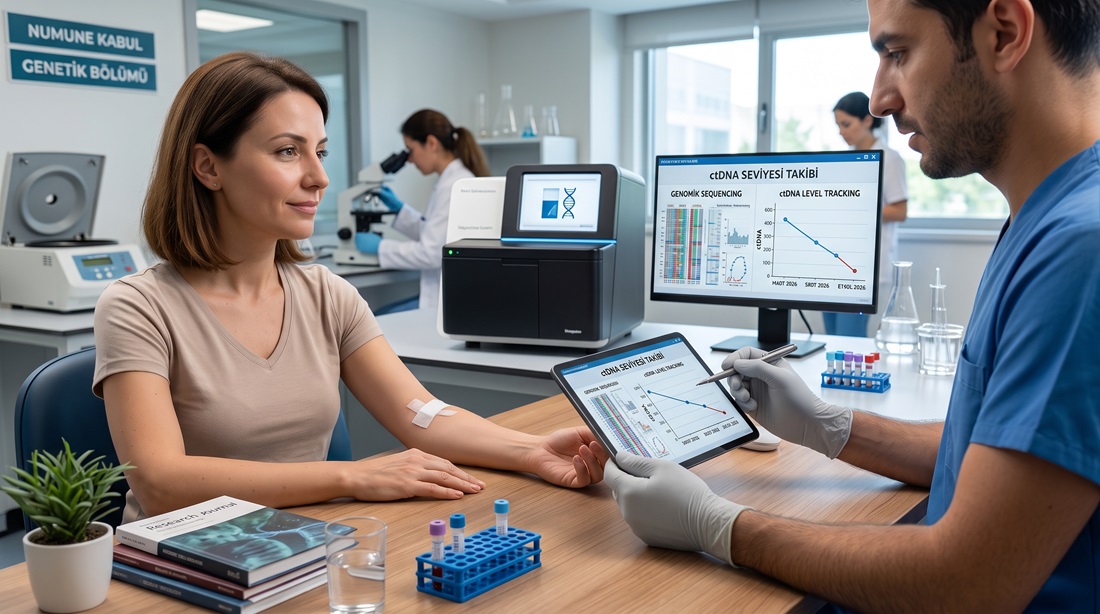
On the scheduled date, the required blood or tissue sample for genetic testing is collected under sterile conditions at your nearest authorized medical center. This process is quick and straightforward; your samples are sent to the laboratory adhering to international safety standards.

Sequencing & Analysis

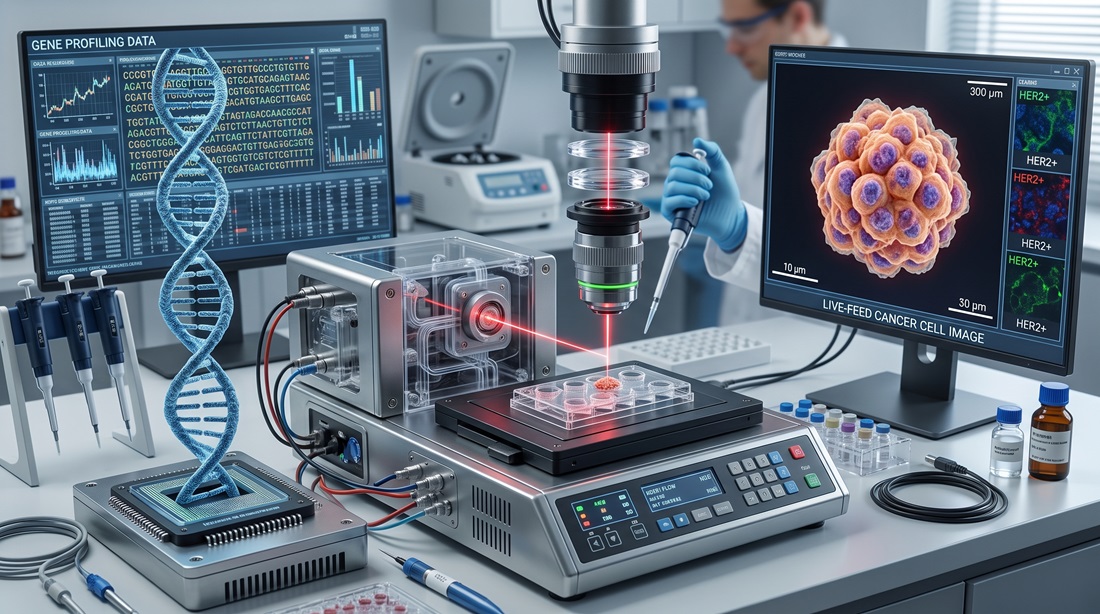
In the laboratory, your sample undergoes advanced NGS (Next-Generation Sequencing) techniques. Your genetic sequence is meticulously analyzed using vast databases for essential biomarkers that are crucial in cancer research.

Interpretation of Results

Your comprehensive test results are compiled into a clear, clinically actionable report tailored for oncologists and shared with your doctor. Your physician will discuss these results with you to precisely align your treatment or monitoring plan with your genetic profile.

Follow-up & Support

Following the results, our medical genetics specialists continue to guide you regarding potential additional tests, participation in clinical trials, or therapies if needed. We stand by you for any questions you might have throughout the entire process and beyond.

Laboratory & Analysis

Hematological Myeloid Tumor Analysis

Explore our comprehensive molecular diagnostics and hematological tumor profiling workflows powered by Next Generation Sequencing (NGS).

Comprehensive Guide to Cancer Types Analyzed by NGS Testing
07.09.2026

Comprehensive Guide to Cancer Types Analyzed by NGS Testing

This comprehensive guide delves into the various cancer types analyzed through Next Generation Sequencing (NGS) testing, highlighting its pivotal role in revolutionizing cancer diagnosis and treatment. Explore how NGS contributes to personalized medicine, offering detailed insights into breast, lung, colorectal cancers, and more, shaping the future of oncology research and patient care.

Read Article

Frequently Asked Questions

Answers to all your questions about NGS tests, genetic analyses, and our processes.

What is NGS Cancer Testing and Which Panel is Used?
Next-Generation Sequencing (NGS) technology is an advanced analysis method that identifies genetic mutations in your tumor tissue. At our center, using the Thermo Fisher Ion GeneStudio S5 system and the Oncomine Comprehensive Assay Plus (OCA Plus) panel, both DNA and RNA sequencing are performed across 517 genes, analyzing mutations, fusions, and genomic signatures such as TMB, MSI, and HRD (GIM).
How long does it take to receive test results?
Following the arrival of the sample at our laboratory, quality control, DNA/RNA isolation, NGS sequencing, and bioinformatic analysis processes are conducted, with results completed in an average of 14 business days.
What sample types are required for NGS testing?
For somatic tumor analysis, paraffin-embedded tumor tissue (FFPE block or slide section) is required. For hereditary (germline) cancer risk analysis, 2-4 cc of blood collected in an EDTA purple-top tube is used.
How is eligibility for targeted therapy and immunotherapy determined?
NGS analysis detects targetable specific mutations and gene fusions in your tumor. During the reporting process, patient-specific targeted therapy, chemotherapy, and clinical trial options are presented based on FDA, EMA, NCCN, and ESMO international databases.
Can hereditary cancer risk be identified through a tumor (somatic) test?
No, hereditary (germline) risk is a separate test performed on blood and does not replace a somatic tumor test. However, if a secondary (potentially hereditary) finding is detected in the somatic panel, it is evaluated by a medical genetics specialist and free genetic counseling is provided to the patient.
Is liquid biopsy (ctDNA) testing available?
Liquid biopsy analysis, which examines circulating tumor DNA (ctDNA) in the blood, can be performed through referral to contracted partner laboratories.
What happens if the sample is insufficient or a result cannot be obtained?
Incoming samples undergo three stages of quality control. If insufficiency is detected at the first stage, new tissue sections are requested. If no results are obtained after two attempts, the patient is offered a fee refund or a second re-run starting the process from the beginning.
Can tumor samples from older or heavily treated patients be used?
Older or heavily treated tissue samples can be analyzed; however, due to tumor heterogeneity and reduced DNA/RNA quality, the clinical relevance and reliability of the result may decrease. Therefore, recent tumor tissue is preferred whenever possible.
Is genetic counseling and doctor referral required for NGS testing?
It is recommended that the process be conducted under physician guidance to establish an accurate treatment roadmap. Every tested patient is considered a genetic counseling patient, and free genetic counseling is provided by a medical genetics specialist within our center.
How and where is my genetic data stored?
Your genetic data is not stored in cloud systems; it is securely kept on the laboratory's local hard drives and university servers with access restricted to authorized personnel.