
Cancer Monitoring with Liquid Biopsy & ctDNA | Oncogencell
What is a liquid biopsy (ctDNA)? Discover the advantages of blood-based cancer testing over tissue biopsies and real-time treatment tracking with Oncogencell.
Cancer Monitoring with Liquid Biopsy (ctDNA): What Are the Advantages Over Traditional Tissue Biopsies?
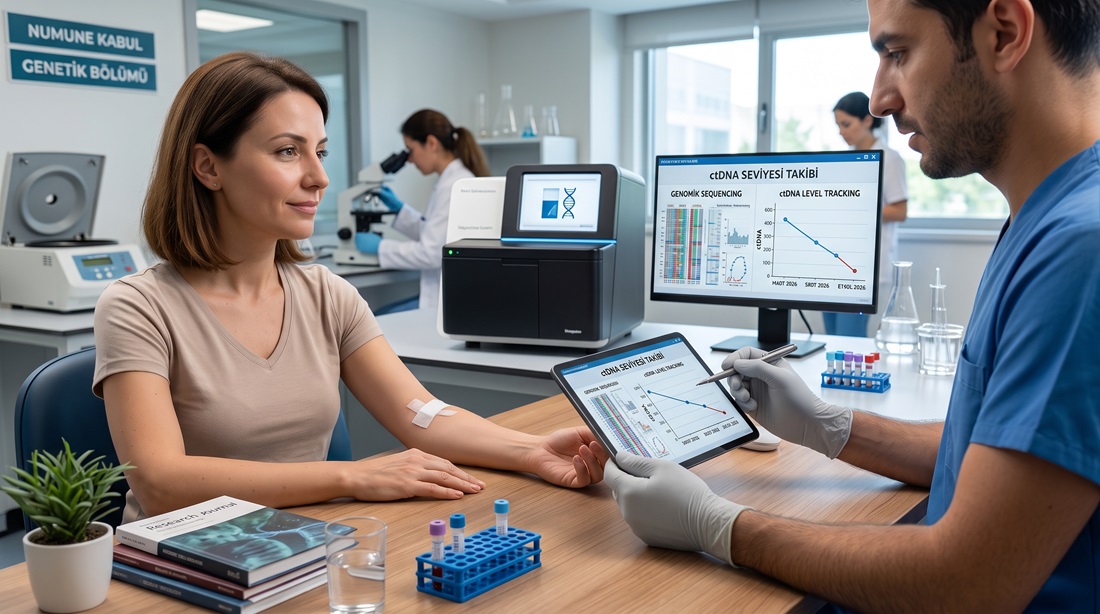
The diagnosis and treatment of cancer is one of the most rapidly evolving fields in the medical world. Until just a few years ago, the only way to obtain genetic information about cancer was to surgically remove a piece of the tumor. Today, however, it is possible to map the genetic blueprint of a tumor and monitor the course of the disease in real-time simply by drawing a standard tube of blood from the patient's arm. This revolutionary method in medical literature is called Liquid Biopsy.
Liquid biopsy, particularly through ctDNA (Circulating Tumor DNA) analysis, is a game-changer for cancer patients and oncologists, offering unparalleled advantages in cancer monitoring. In this comprehensive guide by Oncogencell, we transparently explore what a blood-based cancer test is, why it is increasingly preferred over traditional tissue biopsies, and its vital role in the treatment journey.
What is a Liquid Biopsy?
In its simplest definition, a liquid biopsy is an innovative diagnostic and monitoring method that uses body fluids such as blood, urine, or saliva to obtain information about cancer cells or their genetic material (DNA/RNA). In oncology, the most frequently used liquid biopsy type, which yields the most reliable results, is performed using a blood sample.
The cells in our body (whether healthy or cancerous) break down when they age or die, releasing their DNA into the bloodstream. Because cancer cells divide rapidly and die at a similarly high rate, they continuously shed their own genetic material into the blood circulation.
Understanding the Concept of ctDNA (Circulating Tumor DNA)
The primary goal of a liquid biopsy is to capture these genetic materials circulating freely in the blood. The cancer cell DNA that enters the bloodstream is called ctDNA (Circulating Tumor DNA).
However, there is a very challenging process involved: While there are billions of DNA fragments belonging to healthy cells in the blood, the proportion of ctDNA belonging to the tumor is often less than 1%. This situation is akin to looking for a needle in a haystack. This is exactly where Next-Generation Sequencing (NGS) technology, which is also Oncogencell's core expertise, comes into play. Advanced NGS systems, massive databases, and highly sensitive sequencing power find that 1% of tumor DNA in the blood, isolate it, and profile its mutations.
Why is Traditional Tissue Biopsy Not Always Sufficient?
To fully grasp the advantages of liquid biopsy, it is necessary to understand the challenges of the traditional method (tissue biopsy). Tissue biopsy, which has been the gold standard in oncology for years, involves physically extracting a piece of tissue by entering the tumor area with a surgical instrument or needle. However, this method has some critical disadvantages:
-
It is an Invasive (Surgical) Procedure: It may require anesthesia and carries risks such as infection, bleeding, or organ damage (e.g., pneumothorax in lung biopsy).
-
It is Not Always Accessible: If the tumor is in a highly risky area such as the brain, pancreas, or bone, taking tissue may become impossible.
-
It is Difficult to Repeat: When the genetics of the tumor change (mutate) during the disease process, undergoing surgery again to take another piece is a serious trauma for the patient.
These challenges have pushed modern oncology to seek new paths that are less burdensome but equally informative, giving birth to the liquid biopsy.
5 Major Advantages of Liquid Biopsy Over Traditional Tissue Biopsy
Thanks to advanced genetic technologies, blood-based cancer testing is no longer just "an alternative" but has risen to the position of "first choice" in many scenarios. Here are the 5 most critical advantages that make liquid biopsy stand out:
1. It is Completely Non-Invasive (Zero Surgical Risk)
For a liquid biopsy, you do not need hospitalization, anesthesia, or a surgical incision. Just as you give blood for a routine blood test in any laboratory, 1-2 tubes of blood drawn from your arm are sufficient for a liquid biopsy. This provides immense comfort and safety, especially for elderly patients, those with poor general health, or those who fear painful procedures.
2. It Better Reflects "Tumor Heterogeneity"
Cancer is not a uniform community of cells; on the contrary, it is highly complex and variable. The genetic structure (mutations) of the primary tumor in a patient's breast tissue and a piece of tumor that has spread (metastasized) to the liver can be different from each other. This is called "tumor heterogeneity."
In a traditional tissue biopsy, the needle takes tissue from only one single point. Therefore, different genetic mutations in metastases may be missed. However, because blood circulates throughout the entire body, it collects ctDNA shed from both the primary tumor and metastases scattered across different parts of the body. In short, a liquid biopsy takes a "panoramic video" of the cancer map in the entire body, rather than just a "photograph" of the tumor.
3. Real-Time Monitoring of Treatment Response
One of the biggest questions in cancer treatment is: "Is the chemotherapy or targeted therapy working?" In the traditional method, answering this requires waiting for months of treatment to finish before the patient undergoes PET/CT or MRI scans again.
Liquid biopsy eliminates this waiting period. Just a few weeks after starting treatment, blood is drawn from the patient to check the level of circulating ctDNA. If the tumor DNA in the blood is decreasing, it means the drug is working; if the level is increasing, the tumor has developed resistance to the drug. This real-time monitoring ensures that ineffective treatments with heavy side effects are stopped immediately, allowing a swift transition to a more effective targeted therapy without wasting precious time.
4. Early Detection of Relapse (Recurrence)
When a patient undergoes surgery to remove the tumor and finishes treatment, radiological scans (X-ray, MRI, CT) may come out clean. However, sometimes cancer cells that are too small for radiology to see—at a microscopic level—can remain in the body (MRD - Minimal Residual Disease).
Thanks to its sensitivity in detecting circulating ctDNA, a liquid biopsy can detect the cancer starting to grow again (relapse) at a cellular level months before the tumor appears on imaging devices. This early warning system buys physicians golden time to intervene in the disease once more.
5. A Lifesaving Alternative for Inaccessible Tumors
In advanced lung cancers or brain tumors, the location of the tumor can be too dangerous for a biopsy needle. Sometimes, the amount of tissue taken during the first diagnosis is too small to perform a sufficient genetic analysis (insufficient material). In such "unbiopsiable" or "insufficient tissue" situations, liquid biopsy is the only lifesaving path. Targeted therapy eligibility (e.g., EGFR, ALK, ROS1 mutations) can be determined directly from the blood, allowing the patient to start treatment immediately.
Oncogencell and Liquid Biopsy Solutions
As Oncogencell, our mission is to offer our patients the latest technologies the world has achieved in cancer diagnosis and monitoring. While we successfully perform somatic tumor tissue analyses with the most advanced NGS panels (Oncomine OCA Plus) in our laboratories, we also act as a bridge with our network of world-class contracted external laboratories for our patients' liquid biopsy (ctDNA) needs.
In scenarios where your traditional biopsy tissue is insufficient or your doctor wants to monitor the course of your treatment through blood, we ensure you are directed to the most accurate liquid biopsy analysis process with the assurance of Oncogencell. At every stage of the process, we continue to stand by you under the guidance of our medical genetics experts to correctly interpret the obtained genetic data together with your oncologist.
The Future is Hidden in the Blood: Act Now
Liquid biopsy is not the future of oncology; it is the present. To monitor the dynamic genetic structure of your tumor in real-time, see the response to treatment months in advance, and always be one step ahead in the fight against cancer, you can benefit from the advanced technology offered by liquid biopsy.
Contact Oncogencell's expert team today to find out if the liquid biopsy test is a suitable option for your treatment process and to get detailed information about NGS technologies and blood-based cancer profiling.
Disclaimer: This blog content is prepared for patient information purposes and absolutely cannot replace a medical diagnosis, treatment, or doctor's advice. The applicability of liquid biopsy (ctDNA) tests varies depending on the patient's current condition and cancer type. Test requirements and treatment planning should always be evaluated and decided by your attending medical oncologist.