
Myeloid Tumor Tests
Comprehensive genetic analysis using Next Generation Sequencing (NGS) from blood or bone marrow samples in Acute Myeloid Leukemia (AML), Chronic Myeloid Leukemia (CML), and myelodysplastic syndromes (MDS).
Create Test RequestMyeloid Tumor Profiling Panels
Detailed molecular screening is performed from bone marrow samples using Next Generation Sequencing (NGS) technology; determining diagnosis, risk classification, and targeted (smart drug) treatment strategies in leukemias.
AML Panel
It is a high-precision NGS panel performed on bone marrow in patients diagnosed with or suspected of having AML. By mapping the molecular profile of the disease, it enables risk classification (favorable/adverse) and stem cell transplant/smart drug decisions.
CML Panel
It comprehensively screens genetic changes occurring in bone marrow tissue in CML and related myeloid disorders. By revealing the mutation profile in cases developing treatment resistance or undergoing monitoring, it guides the selection of alternative drugs (TKIs).
Our Step-by-Step Hematological NGS Test Process
Our fast and reliable analysis workflow at international hematology standards, from bone marrow sample to clinical report.
1. Sample Acceptance
Bone marrow or peripheral blood samples taken from patients with suspected/diagnosed AML, CML, or MDS are securely delivered to our laboratory.
2. NGS Sequencing
Mutations and fusions in leukemia-associated specific genes (FLT3, NPM1, ABL1, etc.) are screened via DNA/RNA isolated from the bone marrow cell.
3. Bioinformatics Analysis
The obtained genetic data is processed with advanced algorithms to determine the patient's molecular profile, risk class, and possible drug resistance mechanisms.
4. Clinical Reporting
In accordance with WHO and ELN (European LeukemiaNet) guidelines, a report containing risk stratification and targeted Tyrosine Kinase Inhibitor (TKI) options is presented to your physician.
Consult Us for Our Myeloid Tumor Tests
Get detailed information from our expert team about AML and CML genetic profiling processes, bone marrow sample acceptance conditions, or targeted therapy (TKI) reporting.
Why Should You Have a Hematological NGS Test?
Revealing the mutation profile in leukemias is of vital importance in determining the risk level of the disease and establishing the correct treatment strategy.
Targeted Treatment Selection
Thanks to the detected specific mutations (e.g., FLT3, IDH1/2), it allows the use of smart drugs that directly target the leukemia cell instead of classical chemotherapy.
Precise Risk Classification
By analyzing genetic findings according to European LeukemiaNet (ELN) criteria, it ensures that the patient's risk group (good/poor prognostic) is determined precisely and accurately.
Detection of Drug Resistance
Especially in CML patients, by detecting resistance mutations developed against Tyrosine Kinase Inhibitors (TKIs), it makes it easier for the physician to switch to the most appropriate alternative drug.
Stem Cell Transplant Decision
By detecting patients with a high-risk mutation profile at an early stage, it enables the decision for allogeneic stem cell (bone marrow) transplantation to be made quickly on a scientific basis.
High-Precision Leukemia (Myeloid) Genetic Panel
Our advanced Next Generation Sequencing (NGS) infrastructure, used on samples obtained from bone marrow or blood, simultaneously detects mutations and gene fusions in hematological malignancies.
Simultaneous DNA/RNA Analysis
DNA mutations (e.g., FLT3, NPM1) and RNA-based gene fusions (e.g., BCR-ABL1, KMT2A), which are critical in myeloid diseases, are analyzed in a single workflow simultaneously.
Low Limit of Detection (LOD)
Even in samples with a low cell ratio, early-stage resistance mutations are caught with a Variant Allele Frequency (VAF) sensitivity down to 5%.
Detection of Challenging Mutations
Large insertions like FLT3-ITD (Internal Tandem Duplication), which are difficult to detect with classical methods, are clearly resolved with special bioinformatics algorithms.
Fast Results in Critical Periods
In rapidly progressing diseases like acute leukemia (AML), the laboratory process is optimized so that treatment and stem cell transplant decisions can be made quickly.
Analyzed Hematological Diseases
Our advanced NGS leukemia panels provide a genetic profile that guides treatment in major blood and bone marrow-derived malignancies.
Acute Myeloid Leukemia (AML)
Analysis of critical prognostic mutations and treatment targets such as FLT3, NPM1, CEBPA, and IDH1/2.
Chronic Myeloid Leukemia (CML)
BCR-ABL1 fusion analysis and detection of Tyrosine Kinase Inhibitor (TKI) resistance mutations (e.g., T315I).
Myelodysplastic Syndrome (MDS)
Risk classification of mutations in clonal hematopoiesis-associated genes such as SF3B1, TET2, and ASXL1.
Myeloproliferative Neoplasms (MPN)
JAK2, CALR, and MPL gene analyses for the diagnosis of Polycythemia Vera, Essential Thrombocythemia, and Myelofibrosis.
Review Our Myeloid NGS Clinical Reports
You can review our international report standards prepared in accordance with ELN, WHO, and NCCN guidelines, including risk stratification and smart drug/TKI resistance analyses. Click on the images to enlarge.
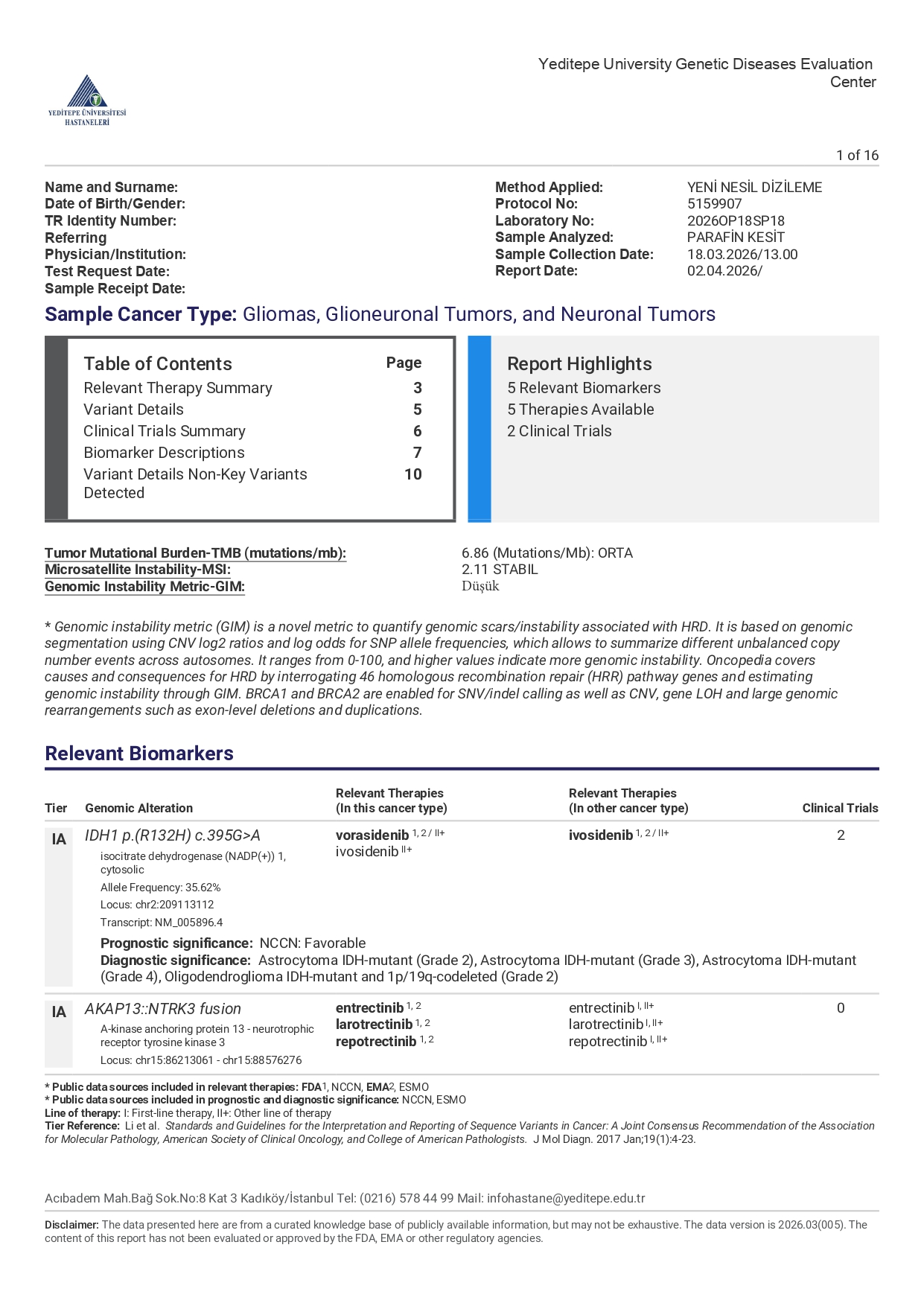
AML Panel Report
Acute Myeloid Leukemia Genetic Profiling Report
CML Panel Report
Chronic Myeloid Leukemia Mutation & Resistance Report
Frequently Asked Questions About Myeloid Tumor & Hematology Tests
Everything you wonder about AML, CML, and MDS tests, bone marrow/blood sample acceptance conditions, fee and refund guarantees, and data security.
Get Information for Personalized Hematological Oncology Treatment
You can immediately contact our expert team regarding our AML and CML Myeloid genetic profiling tests, bone marrow or blood sample acceptance conditions, and reporting processes.