
Targeted Therapy Eligibility & NGS Cancer Testing | Oncogencell
How is targeted therapy eligibility determined in cancer treatment? Analyze tumor genetics with Oncogencell's comprehensive NGS test and step into personalized medicine.
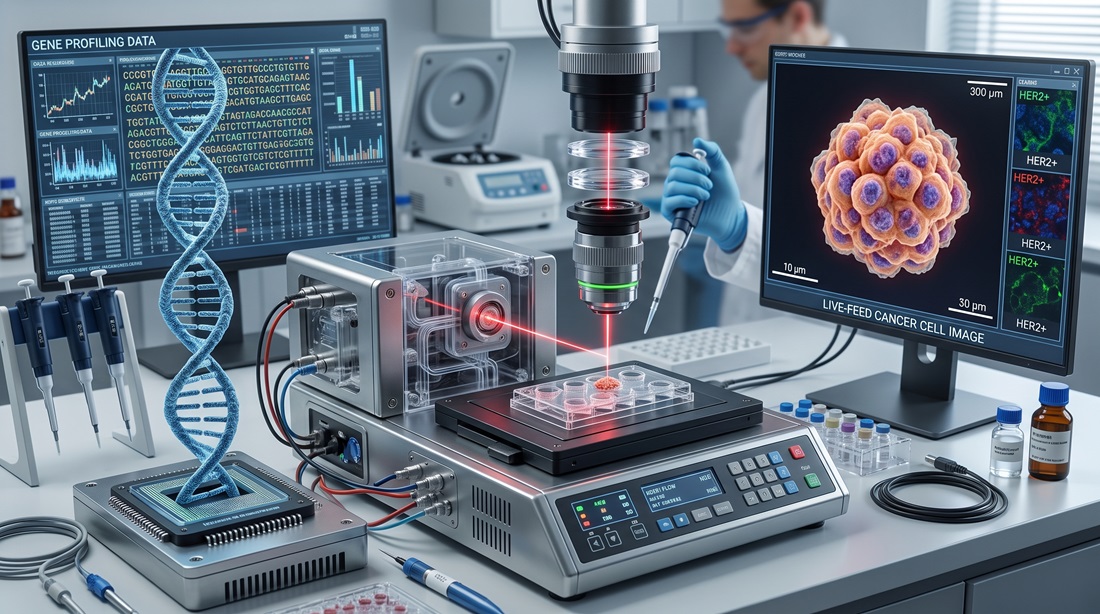
Targeted Therapy Eligibility in Cancer Treatment: How Does NGS Testing Play a Decisive Role?
Receiving a cancer diagnosis is undoubtedly one of the most challenging turning points in the lives of patients and their families. However, today, the science of oncology is rapidly moving away from the traditional "one-size-fits-all" approach, focusing instead on developing strategies completely tailored to the patient and the unique genetics of their tumor. While conventional chemotherapy and radiotherapy were once the only options that came to mind when discussing cancer treatment, today, terms like "targeted therapies" (smart drugs), "immunotherapy", and "personalized medicine" echo most loudly in oncology corridors.
But how do doctors know which patient will respond to which targeted therapy? How is it explained that a specific drug works miracles in one patient while remaining completely ineffective in another? This is exactly where one of the greatest revolutions in modern medicine, the Next-Generation Sequencing (NGS) test, comes into play.
In this comprehensive article by Oncogencell, we delve deep into how eligibility for targeted therapy is determined, the critical role of tumor genetics in treatment planning, and how comprehensive NGS testing turns into a life-saving compass in your cancer journey.
The Paradigm Shift in Cancer Treatment: From Traditional to Personalized Medicine
For decades, traditional cancer treatments relied on the logic of destroying rapidly dividing cells. While chemotherapy agents successfully kill cancer cells, they unfortunately also damage healthy cells in the process. This collateral damage leads to severe side effects, ranging from hair loss and chronic fatigue to extreme nausea and immune system suppression. We can compare the traditional method to firing a shotgun in a dark room; you have a chance of hitting the target, but you will inevitably cause damage to the surrounding environment.
Personalized medicine (precision oncology), on the other hand, is like using a highly calibrated sniper rifle equipped with night vision. It turns on the lights, identifies exactly where the target is and what its specific weak point is, and aims only at that vulnerability. This modern approach is less concerned with "which organ" the cancer started in (e.g., lung, breast, or colon) and more focused on "which genetic mutation" caused it to develop at the cellular level.
What is Targeted Therapy (Smart Drugs) and How Does It Work?
Targeted therapies, commonly known as smart drugs, are specialized medications designed to attack specific molecular abnormalities (gene mutations or protein alterations) that allow cancer cells to grow, divide, and spread uncontrollably.
A cancer cell is essentially a cell with corrupted genetics. Unlike normal, healthy cells, it ignores "stop and die" (apoptosis) signals and continuously receives commands to "divide and multiply." Targeted therapies work by entering the cell or attaching to the cell surface to block this faulty signaling network. By cutting off the tumor's communication and fuel supply, the cancer is starved and eventually destroyed.
However, there is a very critical threshold here: For a targeted therapy to work, the cancer cell must possess the specific genetic mutation that the drug is designed to target. If your tumor does not have the "target" (mutation) that the drug locks onto, the drug will simply not work. This situation is akin to trying to open a locked door with the wrong key.
Answering the vital question, "Will this key open the lock of this tumor?" is only possible through a detailed genetic mapping process.
Mapping the Tumor's Blueprint: What is NGS Testing?
Targeted therapy eligibility is not determined by random trial and error, but by evidence-based molecular analysis. In the past, laboratories performed simple tests that examined only a single gene or a small handful of genes. Today, the NGS (Next-Generation Sequencing) Test, which we proudly apply at the Oncogencell Comprehensive Genetic Profiling Center, is the most advanced technology that reads the genetic code of the tumor using massive data processing power.
The NGS test is the process of simultaneously sequencing millions of fragments of DNA and RNA taken from your tumor tissue and analyzing hundreds of genes at the same time. As a result of this deep analysis, genetic variations that cause cancer—namely mutations, gene fusions, and copy number alterations—are detected in a single run.
Why Choose NGS Over Single-Gene Tests?
If your oncologist requests a single test that only looks at the BRCA or EGFR gene, there is a significant risk of missing the actual underlying cause of the cancer. Furthermore, the tumor tissue (biopsy sample) taken from the patient is extremely valuable and usually small in quantity. Testing each gene separately not only depletes this precious tissue but can also delay the start of the treatment process by weeks.
In Oncogencell laboratories, utilizing the state-of-the-art Thermo Fisher Ion GeneStudio S5 device and the Oncomine Comprehensive Assay Plus (OCA Plus) panel, both DNA and RNA sequencing are performed over exactly 517 genes in a single run. This ensures that your tumor tissue is used efficiently and no potential treatment opportunity is ever missed.
Which Biomarkers are Analyzed with NGS Cancer Testing?
To determine eligibility for targeted drugs and immunotherapy, looking solely at the names of the genes is not enough; the genomic signatures of the tumor must also be examined. Oncogencell NGS test reports present your physician with the following vital information:
-
Actionable Mutations and Fusions: The specific coding errors that order the cancer cell to "multiply" are identified. For example, a lung cancer patient who tests positive for an ALK fusion can live for many years without chemotherapy by using smart pills specifically manufactured for this mutation.
-
TMB (Tumor Mutational Burden): This indicates how many mutations (errors) have accumulated in the tumor's DNA. Tumors with a high TMB value send a much stronger "I am foreign" signal to the immune system. This is the strongest evidence that the patient may respond excellently to immunotherapy (drugs that trigger the body's own immune system to attack the cancer).
-
MSI (Microsatellite Instability): This represents a defect in the cell's ability to repair its own DNA errors. An MSI-High result, much like TMB, indicates that immunotherapy drugs will be highly successful for this patient.
-
HRD (Homologous Recombination Deficiency): This is a very critical genomic signature, particularly in ovarian, breast, prostate, and pancreatic cancers. Patients with a high HRD score benefit significantly from specific targeted therapies called PARP inhibitors.
How Does the Targeted Therapy Eligibility Process Work at Oncogencell?
When you contact us directly or through your physician, you step into a transparent process that complies with international standards, stretching from diagnosis to treatment planning:
-
Sample Collection: Your previously obtained paraffin-embedded tumor tissue (FFPE block) is used for somatic tumor analysis.
-
Laboratory Phase: Incoming samples undergo a strict 3-stage quality control. Once your sample is approved, DNA/RNA isolation and sequencing begin in our advanced devices.
-
Comparison with Global Databases: The genetic alterations we find are matched with databases containing billions of data points from internationally recognized guidelines such as the FDA, EMA, NCCN, and ESMO.
-
Clinical Reporting (14 Business Days): Within an average of 14 business days, a comprehensive report is generated that your doctor can easily read and turn into actionable steps. This report lists the smart drugs suitable for the patient, which drugs will "not work" (resistance mutations), and clinical trials worldwide that you may be eligible to join.
Can Old or Heavily Treated Tumor Samples Be Used?
This is a question frequently asked by our patients. Tumor samples from patients who had biopsies in past years or who have undergone intensive chemotherapy/radiotherapy can be analyzed in Oncogencell laboratories. However, it should not be forgotten that tumors can change their genetic structure over time and due to the treatments they are exposed to (tumor heterogeneity). To make the most accurate and up-to-date targeted drug matching, it is always more reliable to perform the test on the most recent biopsy sample, if medically feasible.
Genetic Counseling and Physician Guidance
An NGS test is not just a laboratory printout; it is a life-saving medical map. Therefore, interpreting the report requires a multidisciplinary approach. It is essential that the process is carried out in conjunction with your medical oncologist so that your treatment map can be created flawlessly.
Moreover, the mutations examined in the tumor (somatic analysis) can sometimes indicate a hereditary (germline) risk inherited from the patient's family. As Oncogencell, if a secondary possible hereditary finding is detected in our panel, we secure our patient and their family by offering free genetic counseling services through the Medical Genetics Specialist physician within our center. Referrals for separate blood tests to confirm familial risk are carried out within an ethical framework.
Conclusion: Stop Shooting in the Dark in the Fight Against Cancer
Targeted therapies have revolutionized oncology, but reaping the benefits of this revolution is only possible by giving the "right drug to the right patient at the right time." Comprehensive Genetic Profiling and NGS testing can reveal your tumor's deepest secrets, protecting you from unnecessary, exhausting, and ineffective chemotherapies; it can help you find that "smart drug" that will significantly increase your survival time and quality of life.
You are not alone in the fight against cancer, and most importantly, in the light of science, you are no longer helpless. Request an NGS test from your oncologist to redraw your treatment plan according to the genetic map of your tumor.
You can consult with Oncogencell experts to learn about the most accurate testing options specifically for your disease and to get detailed information about the process.
Disclaimer: The information contained in this article is strictly for educational and informational purposes; it cannot substitute for direct medical advice for the diagnosis or treatment of diseases. Cancer treatment is highly individualized and should be planned by a multidisciplinary team of physicians led by medical oncologists, taking into account the patient's overall health status. Always share your Oncogencell test results with your physician.